


What does it really mean when someone says “you get to write that off on your taxes!”?

In general, when it comes to running a business, managing expenses is crucial for maintaining profitability. Investing in new equipment, software, and even staff requires a balance of value versus expense. For physicians, it goes to another level entirely since keeping up with the most current technology could literally mean the difference between life and death. Section 179 of the IRS tax code is written exactly for this; encouraging business owners to invest in equipment or software to improve their business while working for their Balance Sheet, not against it. But what does 'writing it off' really mean? Let's get into it.
What is Section 179?
In simple terms, Section 179 of the IRS tax code lets you deduct the full purchase price of qualifying equipment and software from your taxable income in the year you buy or finance it. Instead of writing it off a small amount at a time each year, you can take the full purchase price off of your gross profit. It's a smart way to reduce your tax burden while investing in the tools that help your business thrive!
While we hear all the time, "you get money back" as an expense, it's not really like that. It's more like you were going to pay x amount in taxes based on a net income that is now lower, which in turn, lowers how much you have to pay back to the IRS in income tax. Do you pay the IRS less? Yes. Did you still spend the money on the equipment? Yes. Since you still have to have the money to spend, it's a win-win if you're investing in technology, equipment, or software that has more value than just the tax deduction.
Let's Break It Down with an Example:
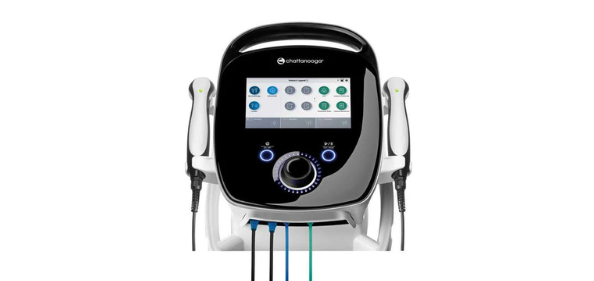
A physician nets $200,000 this year after most of their standard deductions and decides to invest in a new Ultrasound unit for $40,000.
1. The Deduction:
The equipment is $40,000, allowing the physician to deduct that entire amount from their taxable income.
Based on a purchase price of $40,000, there is a new taxable net income:
- Original Net Revenue: $200,000
- Minus the equipment cost (your Section 179 deduction): -$40,000
- New taxable Net Revenue: $160,000
2. The Tax Savings:
Let's say the income tax rate is 30%. Here's how it shakes out:
- Income Tax before deduction: 30% of $200,000 = $60,000 to Uncle Sam
- Tax after deduction: 30% of $160,000 = $48,000
- Total tax savings: $60,000 - $48,000 = $12,000!
That's an extra $12,000 that stays in your bank account on April 15th!
So did you "get all that money back"? Not exactly. Most businesses look at an equipment cost as filling a need first and foremost, and as a bonus, they don't have to pay as much in taxes because of it. Isolated to itself, buying things strictly to get a write-off isn't financially enough to warrant the upfront spend. Is the investment either creating more efficiency or creating more revenue? If you're a physician, do you now have the capability of uncovering more hidden risks and advancing your diagnostic capabilities, while also generating more reimbursement (revenue)? If your answer is yes, it's a worthwhile investment and it will keep some extra money in your bank on the back-end during tax season. That's a win-win.
Want to run your own numbers? Check out the official Section 179 Deduction Calculator.
RECENT POSTS

The Business Of Medicine.
"Business" can be defined simply as what someone does to earn a living. However, in the field of medicine and healthcare, we like to think of 'The Business of Medicine' as a series of interconnected concepts that shape the success of a physician or practice, ultimately leading towards their longe...
LEARN MORE
2 or 20?
2 Years of Morningside Medical Equipment. 2 Key Concepts. Enable physicians to diagnose their patients quicker using the most cutting-edge diagnostic technology, while also improving the business of medicine for them. While most of our team has had decades of experience in the field of medical e...
LEARN MORE
Music and Sound Therapy: An Easy Supplement to Dementia Treatment
As researchers further explore non-pharmaceutical interventions for Dementia, Music Therapy has been found to improve some cognitive function and overall well-being with both patients and caregivers. In an article posted through NIH Library of Medicine, a dynamic meta-analysis was done on 8 indep...
LEARN MORE
For Peripheral Neuropathy, Sudomotor Testing is quickly becoming the diagnostic standard for Primary Care.
Sudomotor Testing Matters More Than Ever. With recent statistics showing 49% of all patients coming into a physician's office are either Diabetic or Prediabetic, the need for quick and accurate diagnostics has never been more important. Even more concerning, about 50% of individuals with Diabetes...
LEARN MORE